





Custom Blank Skateboard Deck Manufacturer: Canadian Maple vs. Birch vs. Bamboo Decks
Related Posts
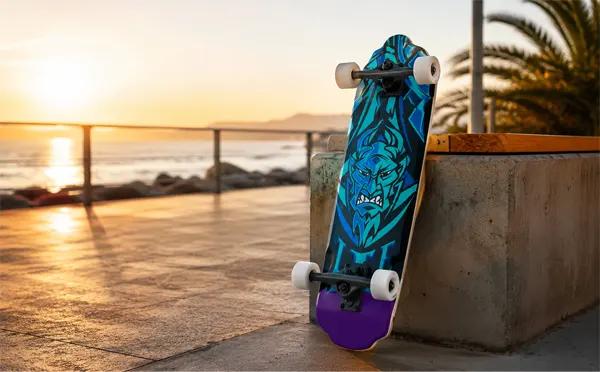
OEM Skateboard Manufacturing: Cost Factors Behind Bulk Skateboard Orders
October 29, 2026
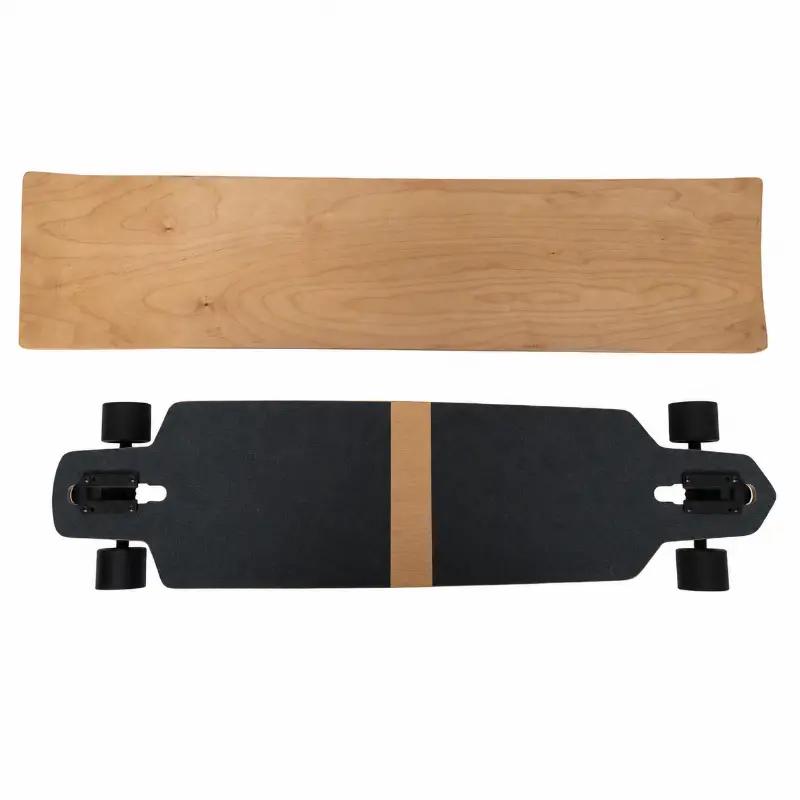
How to Find a Skateboard Manufacturer: A Factory Evaluation Guide
October 29, 2026
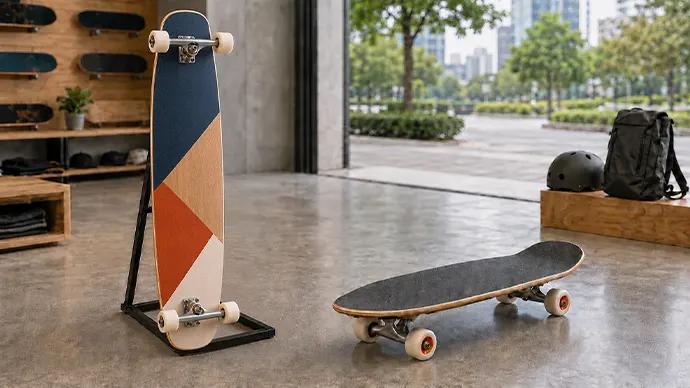
Skateboard Deck Factory in China: How Pressing Shapes Deck Consistency
October 29, 2026
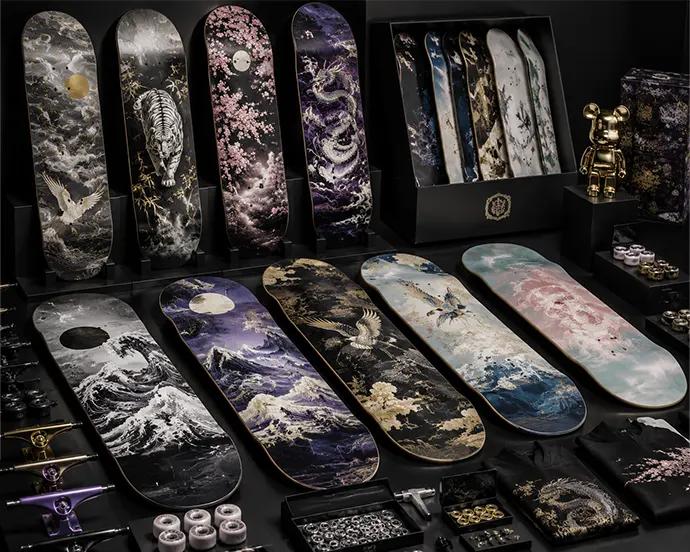
Custom Blank Skateboard Deck Manufacturer: Canadian Maple vs. Birch vs. Bamboo Decks
October 29, 2026
A Custom Blank Skateboard Deck Manufacturer must evaluate more than the wood species when producing skateboard decks. Factors including processing, density and flexibility of the wood, as well as the adhesives, laminate and construction of the deck, all contribute to the final performance of the deck.
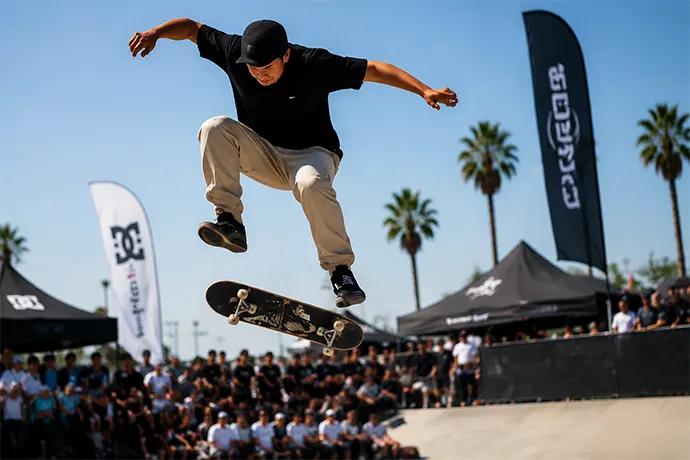
The team at Vigor Tech evaluates material performance, manufacturability and production volume when considering possible materials for a given application.
Canadian Maple, Birch and Bamboo: Materials and Properties
Canadian Maple: Pop, Responsiveness and Strength
Street skateboard decks are traditionally fabricated with Canadian hard maple because of its strength and stiffness. Our 7-ply Canadian maple decks are ideally suited to transmit a pop response and impact resistance.
Maple veneer requires suitable moisture control, surface preparation, and an adhesive system matched to the pressing process. Bond quality cannot be inferred from wood species or bending strength alone. A higher modulus of elasticity (MOE) does not automatically produce better pop; deck geometry, construction, mass, and rider technique also influence the response.
Birch: Economical Option in Hybrid Decks
Hybrid decks consisting of birch and maple veneers are an economical alternative. Moisture and various species of birch affect the mechanical properties of the deck.
We offer birch and maple hybrid constructions for wholesale skateboard decks.
By judiciously combining different types of veneers, manufacturers can reduce costs while controlling important features of the composite. The placement of the various veneers is important. Traditionally, the outer plys of a veneer construct contribute to bending resistance, while the inner layers affect other physical characteristics of the laminate.
A hybrid deck needs to be analyzed as an integrated unit. It cannot be appraised based on the wood content alone.
Properties and Uses of Bamboo
Bamboo has a unique elasticity, tensile strength, and stiffness in the direction of the fibers.
Because of the favorable elasticity, tensile strength, and stiffness, bamboo may find use in cruisers and carving boards, and possibly even long boards with flex control.
There is a common misconception that bamboo decks are lighter and more durable compared to maple deks. This is not always the case, depending on the strip orientation, laminate thickness, and reinforcement.
How Does Maple, Birch, and Bamboo Affect Skateboard Deck Performance?
Skateboard deck manufacturers should test skateboard decks of similar dimensions.
| Property | Canadian Maple | Maple-Birch Hybrid | Bamboo |
| Best Use | Street/trick decks | Entry level/bulk decks | Cruisers/longboards |
| Bending Stiffness | Firmer | More pliable | More pliable |
| Pop Response | Great pop response | Needs structural integrity | More damping |
| Flex | Designs more for no flex | More pliable | Construction dependent |
| Impact | More impact resistant | Veneer affects impact | More impact resistant |
| Weight | Dependent on thickness | Veneer affects weight | Not always lighter |
| Cost | Maple grade affects price | More economical | More complex processes affects cost |
Other Factors Affecting Skateboard Deck Performance
Bending a skateboard deck in half increases its stiffness by approximately the cube of its thickness. Thin skateboard decks can react very differently from the thicker decks.
The behavior of skateboard decks is also effected by:
•Veneer placement.
•The total thickness of the laminate and constituent plies.
•Wheelbase, nose and tail, and concave.
•The damping materials and adhesives.
The deck does not necessarily need more plies to be more pop-y. Flex describes how far a skateboard deck can be bent while loading. A high ply-count deck can be as pop-y as a single ply deck.
How Cold Pressing and Lamination Affect Skateboard Deck Quality
The fabrication of a skateboard deck is a multi-step process and cold pressing is just one aspect of it. Other important factors include, but are not limited to, the distribution and curing of adhesive, pressing conditions, and the level of moisture in the deck.
We use cold pressing in our skateboard deck fabrication process.
The following manufacturing defects are the most common and warrant special attention:
| Defects in Manufacturing | Possible Causes | Control of the Defect |
| Delamination | Inadequate adhesive coverage | Thorough adhesive coverage and verification of bonding |
| Warpage | Moisture imbalance and non-parallel layup | Thin veneer conditioning and construction |
| Variable Flex and Stiffness | Material inconsistency | Grading of material |
Other factors, such as hot pressing, may also influence the strength and dimensional stability of the deck.
Prior to volume production, it is advisable that our customers perform non-destructive testing to assess adhesive bond and the overall integrity of the deck, and evaluate the laminated skateboard decks according to specified criteria.
Acceptance Criteria for Custom Blank Skateboard Decks
When evaluating potential skateboard deck manufacturers, customers should validate the Acceptance Criteria as opposed to general durability statements.
The stated Acceptance Criteria should be measurable. Mechanical tests, among others, can evaluate the deck for strength and quality.
Samples used for testing should have the same geometric shape and size, and the same type of surface preparation and loading. Approved bulk samples should specify reference dimensions and performance criteria.
Choosing the Right Material for OEM Skateboard Production
The optimal design depends on the riding requirements of the skateboard and on the positioning of the skateboard in the market.
| Requirement | Recommended starting point | Sample verification |
| Street Decks | 7-ply Canadian Maple | Pop, Impact resistance, Stiffness |
| Cruiser decks and longboards | Bamboo and hybrid laminates | Flex fatigue, lateral stability |
| Others | As desired | As required |
Prior to requesting quotations for Custom Blank Skateboard Decks, customers should determine the following:
•Concave, Wheelbase, nose and tail shape and sizes.
•Ply and material type and number, finish and roughness of surface, deck weight, and deck flex.
•Sample approval requirements, and acceptance limits.
•Moq, Lead time, and volume.
•Packing and destination Market.
While negotiating the terms for production of a skateboard deck, the total cost, that is, the landed cost of the deck, is of importance. Different designs may yield the same skateboard deck at different costs, depending on the rejections, fulfillment, and logistics costs.
We provide customized design, shape and profile of skateboard decks, surfaces and concave, samplings, and productions (ODM/OEM) of skateboards. We help our customers in defining and transitioning their market skateboard specifications to production skateboard specifications.
Contact us to learn more about our custom solutions for skateboards.
FAQs
Q1. What materials does Vigor Tech offer for custom skateboard decks?
We offer Canadian maple, maple-birch hybrid, bamboo, and other specialized deck material options for OEM/ODM projects.
Q2. Does Vigor Tech manufacture 7-ply Canadian maple decks?
Yes. Our 7-ply Canadian maple decks are designed for street skateboard applications requiring controlled stiffness and responsive pop.
Q3. Can Vigor Tech produce maple-birch hybrid skateboard decks?
Yes. We offer maple-birch hybrid constructions for brands seeking a balance between material cost and structural performance.
Q4. Does Vigor Tech support bamboo skateboard deck customization?
Yes. Bamboo is among our listed material options. Laminate construction and specifications can be discussed based on project requirements.
Q5. What pressing technology does Vigor Tech use?
We use full cold-press technology for skateboard deck lamination, with bonding and pressing parameters selected for the construction.


In This Article
- Canadian Maple, Birch and Bamboo: Materials and Properties
- How Does Maple, Birch, and Bamboo Affect Skateboard Deck Performance?
- How Cold Pressing and Lamination Affect Skateboard Deck Quality
- Acceptance Criteria for Custom Blank Skateboard Decks
- Choosing the Right Material for OEM Skateboard Production
Show All
Collapse
Related Posts
OEM Skateboard Manufacturing: Cost Factors Behind Bulk Skateboard Orders
October 29, 2026
How to Find a Skateboard Manufacturer: A Factory Evaluation Guide
October 29, 2026
Skateboard Deck Factory in China: How Pressing Shapes Deck Consistency
October 29, 2026
Custom Blank Skateboard Deck Manufacturer: Canadian Maple vs. Birch vs. Bamboo Decks
October 29, 2026
Start Your Project
-

Custom skateboard solutions from deck design, materials, graphics to complete product development.
-
Professional OEM support covering sampling, production, quality control and bulk delivery.
-
Provide reliable production support for brands, distributors and retailers worldwide.


