





How to Find a Skateboard Manufacturer: A Factory Evaluation Guide
Related Posts
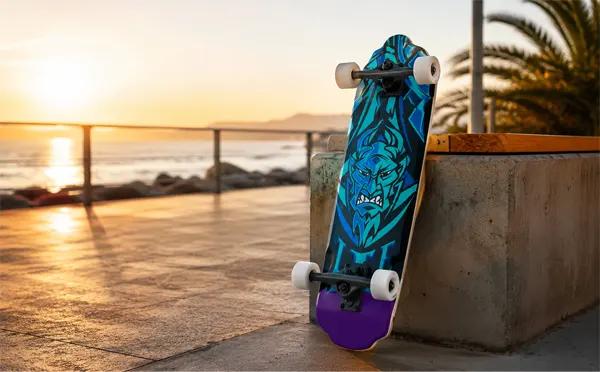
OEM Skateboard Manufacturing: Cost Factors Behind Bulk Skateboard Orders
October 29, 2026
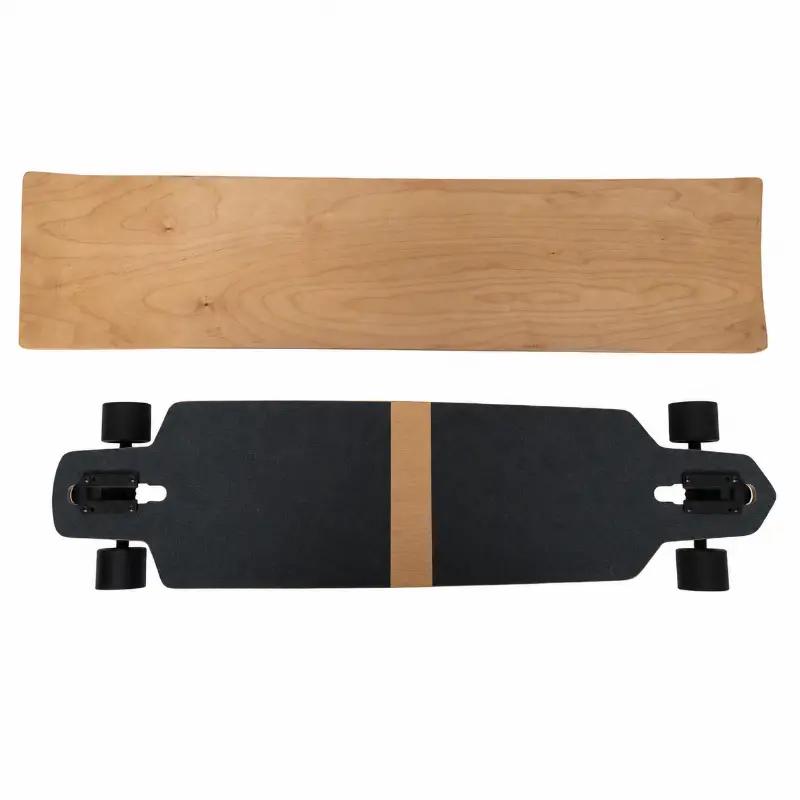
How to Find a Skateboard Manufacturer: A Factory Evaluation Guide
October 29, 2026
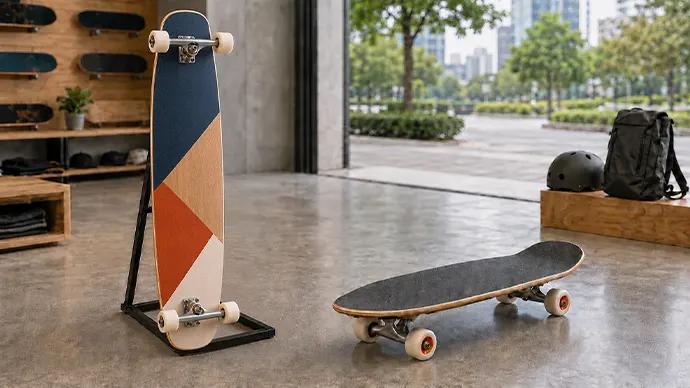
Skateboard Deck Factory in China: How Pressing Shapes Deck Consistency
October 29, 2026
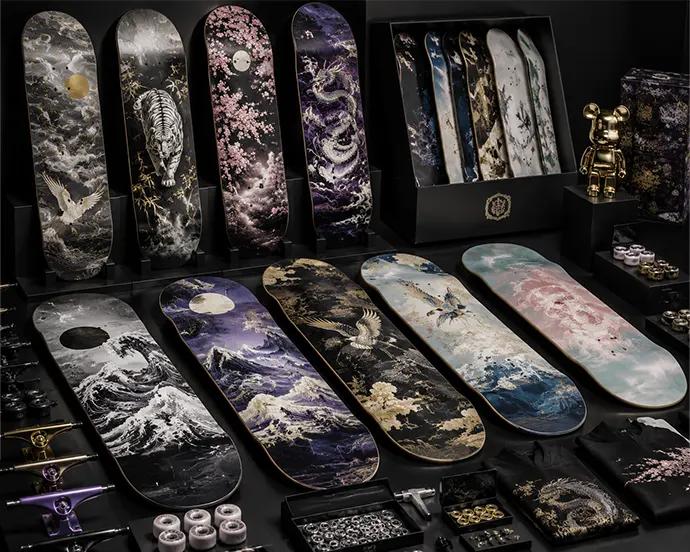
Custom Blank Skateboard Deck Manufacturer: Canadian Maple vs. Birch vs. Bamboo Decks
October 29, 2026
To find a suitable skateboard manufacturer, start by defining the product, intended use, specifications, and order requirements.Two factories may quote the same 8.25-inch maple deck yet use different veneers, pressing cycles, molds, and inspection criteria. The real question is whether a supplier can reproduce your approved construction across successive batches.
Quick Answer: Define your requirements, shortlist suppliers, verify which processes they perform in-house, evaluate samples, review quality records, and compare total costs and delivery terms.
1. Establish Your Skateboard Manufacturing Specifications
Determine the type of skateboard you wish to produce such as street skateboard, complete skateboard, cruiser, longboard or surfskate. Each has varying components, performance, and construction requirements and-or interfaces.
Prior to engaging a potential supplier, it is advisable to develop a manufacturing plan including the following:
•Deck Construction: Specifications such as deck length, width and wheelbase, nose and tail dimensions, truck-hole positions, and concave profiles.
•Deck Materials: Species of wood, adhesives, and veneer.
•Other Items: Artwork and/or grip tape, and other accessories, delivery and shipping documentation, commercial terms.
OEM vs.ODM Manufacturing
OEM refers to manufacturer's production based on the buyer's final design, and ODM refers to a manufacturer's involvement in a product's design, including deck construction, dimensions and materials.
Developing a new concave profile may require new tooling, while updating deck graphics may not require any new tooling.
2. Check Supplier Capabilities
There are many possible suppliers listed in a Google search for "custom skateboard manufacturer," "skateboard factory in China," and "OEM skateboard manufacturer." Others may be listed on business-to-business (B2B) marketplaces. The examines the actual capabilities of the suppliers.
| Supplier Type | Main Advantage | Key Consideration |
| Direct Manufacturer | Direct control over production and quality | Verify in-house processes |
| Trading Company | Multi-factory sourcing and coordination | Identify the actual producer |
| OEM/ODM Factory | Product development and customization | Confirm engineering and tooling capacity |
Some Supplier Verification Activities include:
•Ask to see their production floor and take a tour of their factory.
•Ask to see records of raw material Inspections.
•Confirm that the supplier is in control of their engineering changes and quality complaints.
Equipment availability alone does not establish who produces your order. Confirm the manufacturing route for the quoted product, including any outsourced pressing, machining, printing, finishing, or assembly.
3. Assess Materials, Technology, and Optional Custom Features
Wood Selection and Lamination
While Canadian hard-rock maple is typically used in skateboard deck production, other factors beyond the source of the wood affect performance.
Among others, these factors include veneer grading, moisture content, grain alignment, and the kind of adhesive used.
Instead of taking the manufacturer's word for using high-quality wood, prospective customers should define the standards against which they will evaluate the construction of the product.
Cold Pressing vs. Hot Pressing
There are factors beyond the scope of this report that will affect the final outcome.
For example, a product made using the cold-press process will have springback and torsional flex.
Making skateboard decks using the cold press process has several advantages over hot pressing, provided the right raw materials and adhesives are used, and adequate pressure is exerted and time allowed for curing.
Graphic Printing
Prospective customers should be aware of the trade-offs for the method of graphic printing they choose. For example, print costs vs. abrasion resistance, or print registration.
4. Evaluate Capacity and Quality
Production volume and product quality are separate considerations. Confirm whether the supplier can meet the required specifications at your order quantity and maintain them across repeat orders.
Vigor Tech's skateboard manufacturing system has been in operation since 1995 and uses over 50 CNC presses. While the capacity of the equipment allows for strategic production planning, confirmation of equipment schedules and the potential for processinig of customer orders remain necessary.
The quality of products is evaluated at several stages and against several criteria. Some of these criteria and methods of verification are described below.
| Quality Inspection Stage | Critical Quality Factors and Attributes | Verification Method |
| Raw materials | Type of veneer, moisture content, adhesive specification | Third party inspection report |
| Press operations | Thickness, profile, warpage | Non-contact measurement |
| Post-Press structural testing | Response to flexural load, adhesion | Loading condition and bond test |
| CNC operations | Edge definition, wheelbase | Part dimensions and drawings |
| Surface treatment | Registration of graphic, coating | Visually |
| Final Inspection | Batch-to-batch consistency, packaging | Sample part |
Additional considerations: certification scope should also be validated. Management's representation of product compliance is not an assurance of product compliance with destination market requirements.
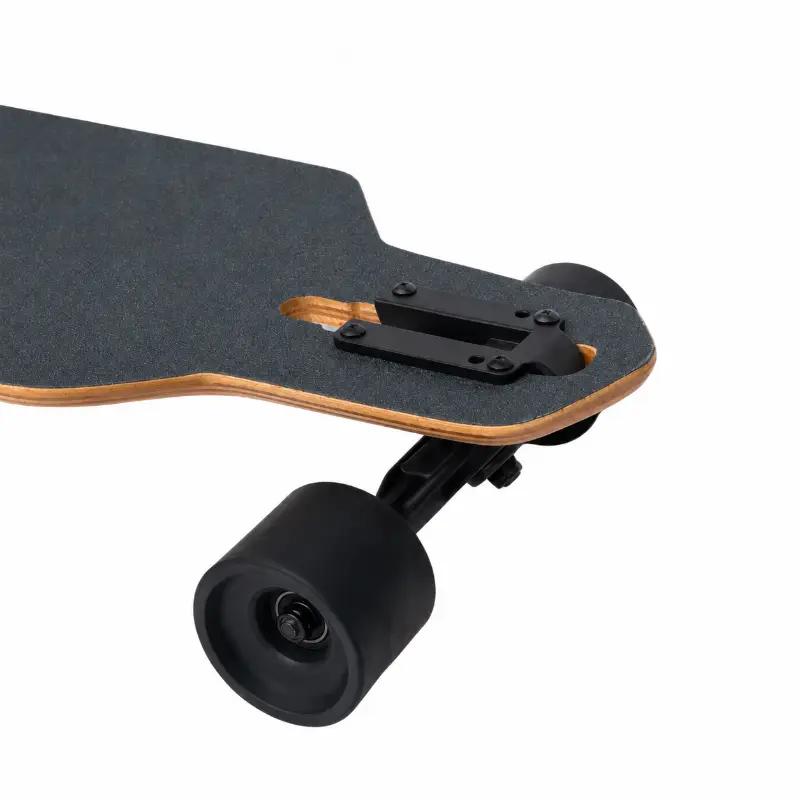
5. Take Samples, Evaluate Costs
Samples must be inspected prior to bulk production.
An ideal approval process is:
Specification Approval → Prototype → Dimensional & Functional Testing → Approved Reference Sample → Pilot Run → Mass Production
At Vigor Tech, we carry out specification confirmation, sample development, and production along with quality inspection for OEM/ODM customers.
While reviewing quotations, you should consider your entire procurement structure, and evaluate the following elements of each quotation.
| Element to be Evaluated | What to be verified |
| MOQ | Minimum order quantity for the desired item, size or specification. |
| Tooling Cost | Charges for developing, ownership and revision of molds |
| Sample Cost | Prototypes and product tests, and subsequent revisions |
| Unit Cost | Finished good, hardware, printed circuit, packaging and labeling |
| Production Lead Time | Time required to approve and commence production |
| Shipping Terms | Terms of sales, freight, import duties and risk of cargo damage |
Our lead time for an order is around 30-45 working days, and can be less, depending on the quantity. Order lead time can be increased due to product development and customs clearance. New tooling can further increase the lead time.
Select a Manufacturer for Long-Term Reliability
Among other factors, the final choice will hinge on which supplier provides better control over manufacturing, and which offers stronger assurances regarding the delivery of repeatable quality and engineering support.
A supplier that meets the above should also systematically document and correct manufacturing deviations during the production process to ensure that final products pass through acceptance sampling.
This is the real focus of The Skateboard Manufacturer. Like Sam McGuire does, we can also go behind the sample and assess the production system and processes in place.
Vigor Tech supports OEM/ODM skateboard projects with cold-pressed decks, customization, sampling, and production coordination. Contact us with your drawings or reference products, target specifications, order quantity, destination market, and required delivery date to discuss feasibility and next steps
FAQs
Q1. How long has Vigor Tech been manufacturing skateboards?
We have been involved in skateboard manufacturing since 1995, with over 31 years of industry experience.
Q2. What types of skateboards does Vigor Tech manufacture?
We manufacture maple skateboard decks, complete skateboards, longboards, surfskates, and customized skateboard products.
Q3. What materials does Vigor Tech use for skateboard decks?
We offer Canadian hard-rock maple, Northeast China maple, and Russian maple options, depending on product specifications.
Q4. What pressing technology does Vigor Tech use?
We use full cold-press technology for skateboard deck manufacturing, with an emphasis on controlled lamination and deck consistency.
Q5. Does Vigor Tech support OEM and ODM skateboard manufacturing?
Yes. We support custom deck shapes, dimensions, concave profiles, materials, graphics, components, and product development.


In This Article
Related Posts
OEM Skateboard Manufacturing: Cost Factors Behind Bulk Skateboard Orders
October 29, 2026
How to Find a Skateboard Manufacturer: A Factory Evaluation Guide
October 29, 2026
Skateboard Deck Factory in China: How Pressing Shapes Deck Consistency
October 29, 2026
Custom Blank Skateboard Deck Manufacturer: Canadian Maple vs. Birch vs. Bamboo Decks
October 29, 2026
Start Your Project
-

Custom skateboard solutions from deck design, materials, graphics to complete product development.
-
Professional OEM support covering sampling, production, quality control and bulk delivery.
-
Provide reliable production support for brands, distributors and retailers worldwide.


